Hitting·October 6, 2026
Confused by USABat, BBCOR, USSSA, and USA Softball stamps? A parent-friendly breakdown of every common bat certification — what it means, which leagues require it, and how to avoid a game-day surprise.
Buying a new bat for your kid can feel overwhelming once you see the alphabet soup of certification stamps. The single most expensive mistake parents make is buying a bat that isn't approved for their kid's league — showing up on game day with a brand-new bat that can't actually be used.
To make shopping easier, here's a breakdown of the most common bat stamps, what they mean, and which leagues require them.
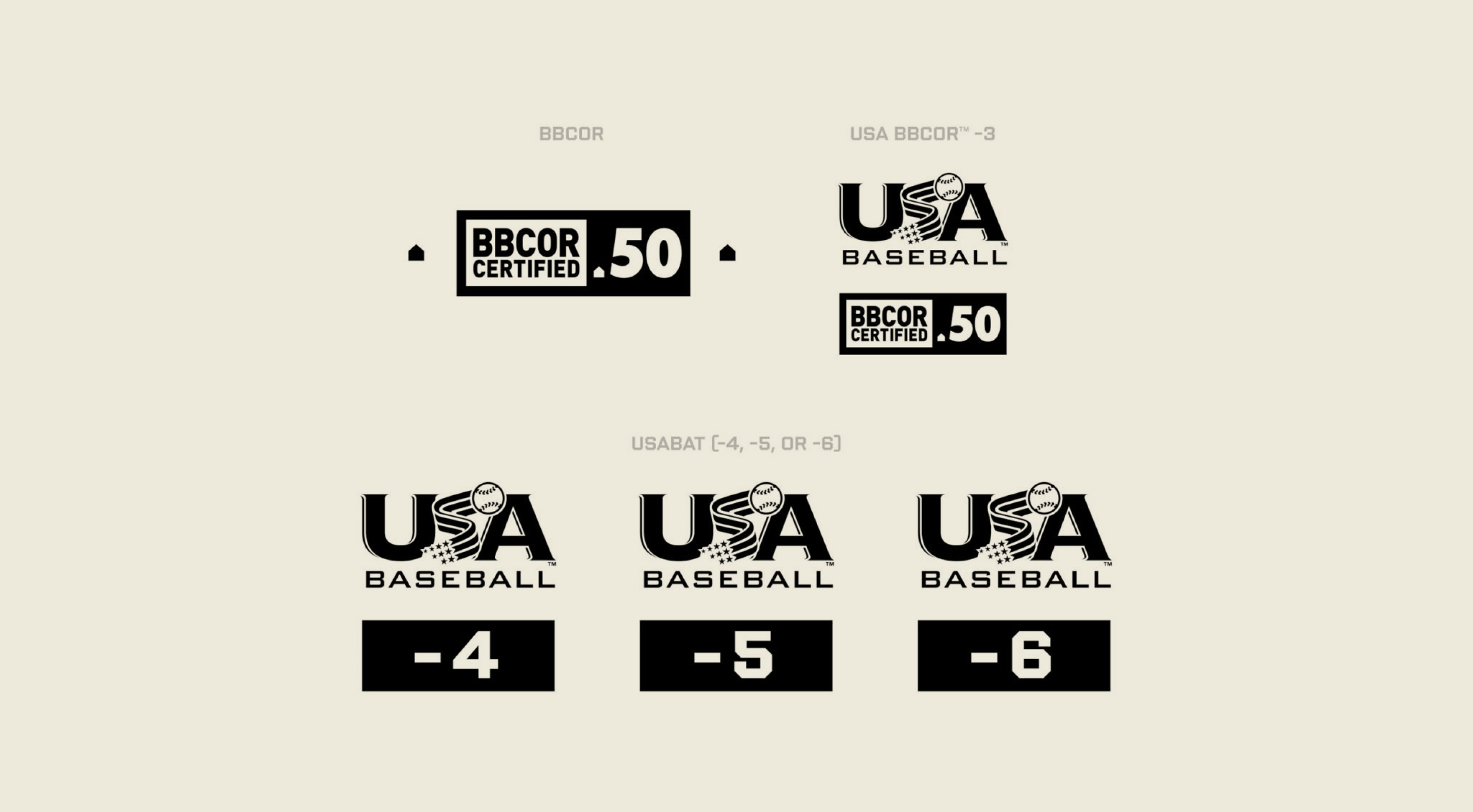
Required for most youth baseball leagues:
In 2018, the USA Baseball standard replaced the older BPF 1.15 certification. The goal: make non-wood bats perform more like traditional wood bats for better safety and consistency.
Wood bats are still allowed in most leagues, but most kids prefer aluminum or composite — they're lighter, more durable, and easier to swing.
Best for: youth players in recreational and league play.
If your kid is in high school or prepping for college baseball, you'll need a BBCOR-certified bat.
BBCOR stands for Bat-Ball Coefficient of Restitution — a measure of how much energy transfers from the bat to the ball. In simple terms, BBCOR bats limit the "trampoline effect" so they perform more like wood bats.
Requirements:
Best for: high school and college baseball.
Many fastpitch softball leagues require bats approved by USA Softball (formerly ASA). To get this certification, bats must pass performance testing that limits ball exit speed to 98 MPH.
You'll still see older bats with the ASA logo. Newer ones carry the USA Softball stamp.
Best for: fastpitch leagues following USA Softball rules.
Same governing body, same 98 MPH exit speed test, just applied to slowpitch bats.
Best for: slowpitch leagues using USA Softball rules.
ISA stands for the Independent Softball Association. Smaller than some governing bodies, but ISA-sanctioned tournaments and leagues are growing.
If your league or tournament asks for ISA approval, look for the ISA stamp on the bat.
Best for: ISA tournament and league play.
NSA-certified bats are approved for play in National Softball Association leagues. The current NSA stamp was introduced in 2012, so anything older may not be legal.
Best for: NSA-sanctioned softball leagues and tournaments.
USSSA stands for the United States Specialty Sports Association. USSSA fastpitch bats are typically allowed higher performance levels than USA Softball bats — meaning they feel "hotter" and produce greater exit speeds.
Some leagues allow USSSA. Others require USA Softball certification. Always check the league rules before buying.
Best for: competitive fastpitch and travel ball.
Same higher-performance philosophy applied to slowpitch.
Best for: competitive slowpitch leagues and tournaments.
The USSSA Baseball stamp is for youth bats designed for higher performance than USA Baseball bats. Unlike USA Baseball bats, USSSA bats can have larger barrel sizes:
Because of the extra pop, USSSA bats are common in travel and tournament play.
Best for: travel baseball and competitive youth players.
Senior Softball bats are built for senior league play, with a slightly higher performance ceiling than standard USSSA slowpitch. Senior Softball uses a BPF rating of 1.21; USSSA uses 1.20.
Small difference, but it does technically let Senior Softball bats perform a touch hotter.
Best for: senior slowpitch leagues.
Before you swing a credit card, check with your league, coach, or tournament director to confirm which certification stamps are allowed. Two bats can look almost identical — one legal, one not. A 30-second check before purchase saves the worst possible game-day surprise.
Like this? Get the free drill guide.
A coach-written PDF: 5 backyard drills for kids 5–8, with cues, equipment lists, and a sample practice week. Plus the occasional note from The Garage.