
Hitting·August 4, 2026
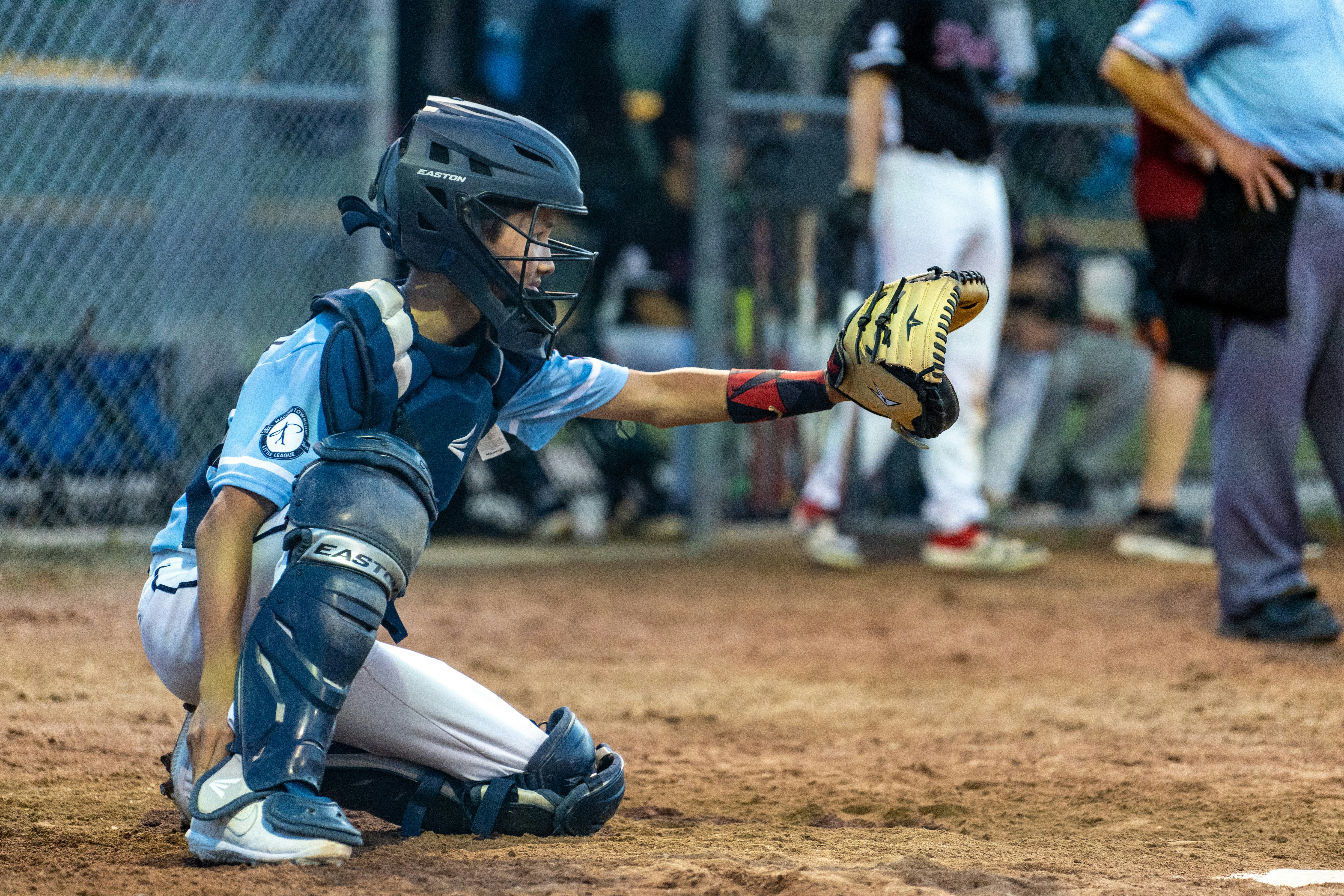
Catchers do more work than any other position in baseball. Every pitch is a play. Every wild pitch is a decision. Every steal attempt is theirs to manage.
And most of that work is invisible to the average parent in the stands.
If your kid is interested in catching, this is the four-skill foundation that matters most at the youth level. Master these and you're ahead of 80% of the kids playing the position.
Two stances. Know when to use which.
This is the relaxed stance. Comfortable for a full game. Used when there's nobody to throw out and the catcher is just receiving pitches.
The trade-off: secondary stance is exhausting. You can't squat in that position for 7 innings. Only use it when there's a steal threat.
Receiving is making strikes look like strikes — and stealing the occasional borderline pitch for a strike.
The basics for a 9-12 year old:
The advanced version (framing) — twisting the glove to make borderline pitches look like strikes — is a high school skill. Don't worry about it yet.
A catcher who can block is a catcher who's trusted. Pitchers throw with confidence when they know a curve in the dirt won't go to the backstop.
When a pitch is heading low and to one side:
The big lesson: you don't catch a blocked ball. You stop it.
A young catcher's instinct is to reach with the glove and try to catch a low pitch. Wrong instinct. The job is to keep the ball in front, not to glove it cleanly.
Once they internalize "stop, don't catch," everything changes.
Tennis balls because real balls hurt. Build the reflex first; intensify later.
Pop time — from glove pop (ball hits catcher's glove) to glove pop (throw arrives at second base) — is the single most-measured catcher skill at the older levels.
For young catchers, the focus isn't pop time. It's footwork.
The most common mistake: a young catcher who turns and steps with their throwing arm before the feet have set. The throw flies wide, the ball ends up in center field.
The fix: feet first, then arm. Drill it on knees first — no body movement, just glove-to-throwing-hand transfer. Then add the footwork.
Quality catcher's gear is not optional. Cheap gear is dangerous gear. Items in order of importance:
Used gear is fine for kids 5–10 (they grow out of it). Buy new at 11+, or quality used from a reputable source. Inspect for cracks.
Beyond the four skills, a great catcher does things you don't see on a scoresheet:
These are mental skills, not physical. The 10-year-old catcher who thinks the game is more valuable than the 10-year-old catcher who's just an athletic kid behind the plate.
Catching is the hardest position to play and the easiest to get noticed in if you do it well. A kid who can squat, receive, block, and throw — at 12 — has a path to a long baseball life.
Most kids never master the basics because the basics aren't sexy. Don't fall into that trap.
If your kid catches and you want a structured progression on the fundamentals, book a free first session. We coach both sides of the game, including catcher-specific work.
Like this? Get the free drill guide.
A coach-written PDF: 5 backyard drills for kids 5–8, with cues, equipment lists, and a sample practice week. Plus the occasional note from The Garage.

